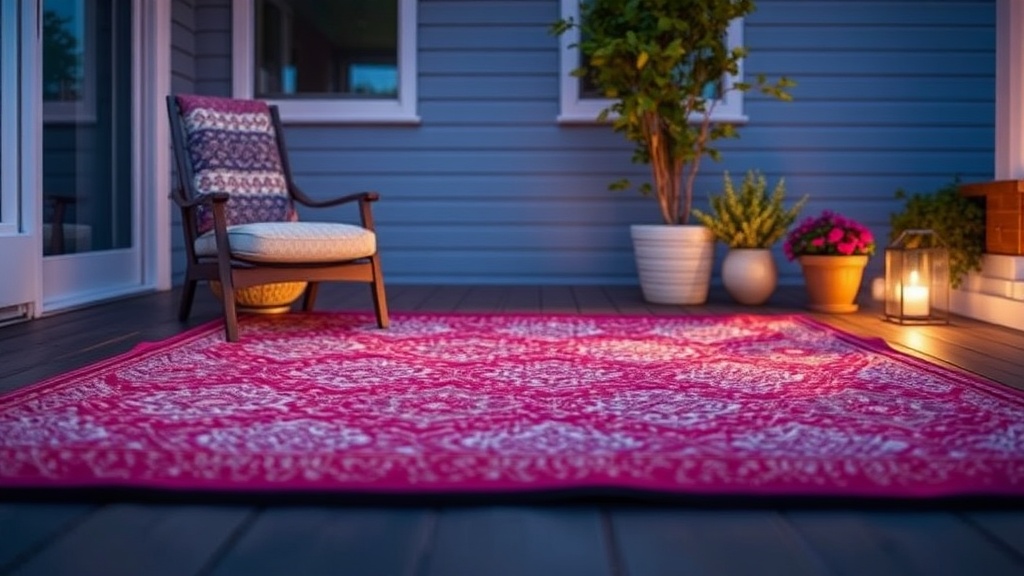
Why Your Outdoor Rug is Fading and How to Fix It

You step onto your patio for a morning coffee, expecting the vibrant navy and cream geometric pattern you bought last spring, but instead, you see a washed-out, grayish version of what once was. The sun has taken its toll, and the edges of your outdoor rug look brittle and tired. This isn't just an aesthetic nuisance; a fading rug can make a well-tended garden feel neglected. Understanding why UV rays, moisture, and debris are stripping the color from your outdoor textiles—and knowing how to reverse or prevent the damage—will save you from having to replace your patio decor every single season.
The Science of Fading: Why Color Disappears
The primary culprit behind a dulling outdoor rug is photodegradation. When ultraviolet (UV) radiation hits the synthetic fibers of a rug, it breaks down the chemical bonds in the dyes. This is particularly aggressive with certain pigments, such as deep reds and bright purples, which tend to lose their vibrancy faster than blues or greens. If your patio is located in a high-sun area, such as a south-facing deck in Arizona or a bright poolside area in Florida, this process happens at an accelerated rate.
Beyond the sun, there are three other mechanical reasons your rug is losing its luster:
- Oxidation from Moisture: If you live in a humid climate or have a rug that stays damp due to heavy morning dew, the constant cycle of wetting and drying can leach dyes out of the fibers.
- Micro-Abrasion: Wind-blown sand, dirt, and organic debris from your garden beds act like sandpaper. As these particles settle into the weave and are stepped on, they physically scrape away the colored surface of the fiber.
- Chemical Exposure: Spills from acidic substances, like citrus juice or certain fertilizers used in your garden, can cause localized bleaching or discoloration.
How to Revive a Faded Outdoor Rug
While you cannot truly "re-dye" a synthetic outdoor rug at home, you can often restore its appearance by removing the "gray veil" of dirt and oxidized surface fibers. Most people think a rug is faded when it is actually just coated in a fine layer of environmental buildup.
Step 1: The Deep Clean
Before applying any treatments, you must remove the physical debris. A simple vacuuming isn't enough for an outdoor rug because the dirt is often embedded deep in the pile. Use a high-powered shop vacuum or a heavy-duty outdoor vacuum to clear the weave. Once the loose dirt is gone, use a garden hose with a spray nozzle to rinse the rug thoroughly. This removes the microscopic grit that makes colors look muted.
Step 2: The Vinegar and Mild Detergent Method
For a safe, effective deep clean, mix one cup of white distilled vinegar with a gallon of warm water and a few drops of a pH-neutral dish soap (like Dawn). The acidity of the vinegar helps break down mineral deposits from hard water and clears away the dulling film. Use a soft-bristled scrub brush to work this solution into the fibers in a circular motion. Do not use harsh bleach or caustic cleaners, as these will further degrade the synthetic polymers used in most outdoor rugs.
Step 3: The Drying Phase
Never leave a wet rug in a shaded, damp corner of your yard. To prevent mold and to ensure the colors look their brightest once dry, hang the rug over a sturdy fence or a drying rack in direct sunlight. The sun's heat will help evaporate the moisture quickly, but be mindful of how long it stays out; once it is dry, bring it back to its designated spot.
Preventative Strategies for Long-Lasting Color
Maintenance is far more effective than restoration. If you want your patio setup to look as fresh as the day you installed it, you need to implement a proactive care routine. This involves both physical protection and smart placement.
Use Shade and Natural Buffers
If your rug is losing color rapidly, look at the surrounding landscape. You can use your garden to create a natural UV shield. For example, if your rug sits in a bright, open area of the patio, consider choosing the right shade plants for your backyard to cast shadows over the seating area during peak sun hours (typically 10:00 AM to 4:00 PM). Tall perennials or a strategically placed trellis with climbing vines can act as a living sunblock, protecting your textiles without blocking the breeze.
Rotate and Flip
Just as you might rotate a heavy ceramic planter to ensure even sun exposure, you should rotate your outdoor rug every few months. If your rug is a single-sided weave, you can also flip it over. The underside of many outdoor rugs is often less exposed to the elements and can serve as a "spare" surface. This prevents one specific section from bearing the brunt of the sun and foot traffic.
Implement a Seasonal Storage Plan
The best way to prevent fading is to remove the rug from the elements entirely when it isn't in use. If you live in a region with harsh winters or a heavy monsoon season, do not leave your rug out year-round. Clean it thoroughly, let it dry completely, and store it in a dry, airtight container or a garage. This prevents the combination of UV exposure and moisture-driven oxidation from eating away at the fibers during the off-season.
Choosing Better Materials for the Future
When it comes time to replace a faded rug, look beyond the pattern and focus on the fiber composition. Not all "outdoor" rugs are created equal. If you want longevity, you need to understand the material science behind the product.
| Material | Pros | Cons |
|---|---|---|
| Polypropylene | Highly resistant to UV and moisture; very affordable; easy to clean. | Can feel "plastic-y" underfoot; can degrade under extreme heat. |
| Polyester | Excellent color retention and softness; great for high-traffic areas. | Slightly more expensive; can be sensitive to very high heat. |
| Solution-Dyed Acrylic | The gold standard for colorfastness; the color is part of the fiber itself. | The most expensive option; often heavier and less "washable" in a machine. |
If you are looking for the best durability, I always recommend solution-dyed products. In standard dyeing, the color is applied to the surface of the fiber. In solution-dyeing, the pigment is added to the liquid polymer before the fiber is even extruded. This means the color is consistent throughout the entire strand, making it nearly impossible to "fade" through surface abrasion or light UV exposure.
A Practical Maintenance Checklist
To keep your outdoor living space looking intentional and vibrant, keep this quick maintenance schedule in mind:
- Weekly: Shake out the rug or use a vacuum to remove loose dirt and organic debris from your garden.
- Monthly: Spot-clean any spills immediately with a damp cloth and mild soap to prevent permanent staining.
- Seasonally (Spring/Fall): Perform a deep clean using the vinegar and mild detergent method described above.
- Annually: Evaluate the condition of the fibers. If the rug feels brittle or "crunchy," it is time to replace it to avoid leaving debris on your patio.
A beautiful outdoor space is a living, breathing thing. It reacts to the sun, the rain, and the wind just as much as your vegetable garden does. By treating your outdoor rug as a functional piece of your landscape—rather than just a piece of furniture—you can maintain a beautiful, cohesive environment that feels fresh and inviting all season long.