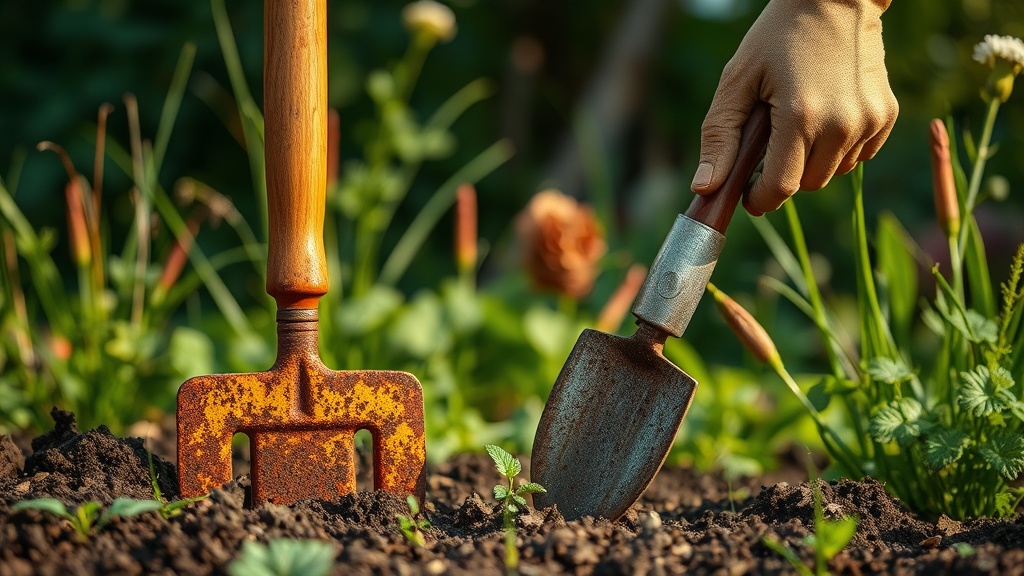
Why Your Garden Tools Are Rusting So Fast

Quick Tip
Always dry your tools completely and apply a light coat of oil before storing them for the season.
Stop blaming the quality of your steel
Many gardeners assume that rust is an inevitable sign of cheap manufacturing or low-grade metal. In reality, most tool degradation happens because of how we treat our equipment after the work is done. If you find your trowels, pruners, or spades developing orange oxidation just weeks after purchase, the issue likely isn't the brand of the tool, but your post-gardening routine. Preventing rust is a matter of moisture management and surface protection, not just buying more expensive hardware.
The culprit: Residual moisture and organic matter
The most common reason for rapid rusting is leaving organic material on your tools. If you prune a rose bush and leave the sap on your bypass pruners, or if you dig in heavy clay and leave wet soil on your shovel, you are creating a perfect breeding ground for oxidation. The moisture trapped in that debris stays against the metal long after the tool is put away. To prevent this, follow these three steps every time you finish a session:
- Scrape: Use a stiff brush or a piece of scrap wood to remove all visible dirt and plant residue.
- Dry: Never put tools directly back into a plastic bin or a damp shed. Use a clean, dry rag to wipe down the metal surfaces completely.
- Inspect: Check the joints of your hand tools. Sap buildup in the pivot of pruners holds moisture that eventually eats through the steel.
The secret weapon: A light coat of oil
Metal needs a barrier between it and the oxygen in the air. For high-use tools like your Hori Hori knife or your digging spade, a simple wipe-down isn't enough. I recommend keeping a small tin of Camellia oil or even a basic mineral oil in your potting shed. Before storing your tools for the night or the season, apply a very thin layer of oil to the metal parts using a lint-free cloth. This creates a hydrophobic barrier that prevents water from touching the steel.
Proper storage environments
Where you store your tools matters as much as how you clean them. Storing metal tools in a humid garden shed or a plastic bucket can trap moisture, leading to the same issues you might see with musty outdoor cushions after a heavy rain. If your shed lacks ventilation, consider hanging your tools on a pegboard rather than stacking them in a pile. This allows air to circulate around the metal, ensuring no damp spots remain hidden during the drying process.