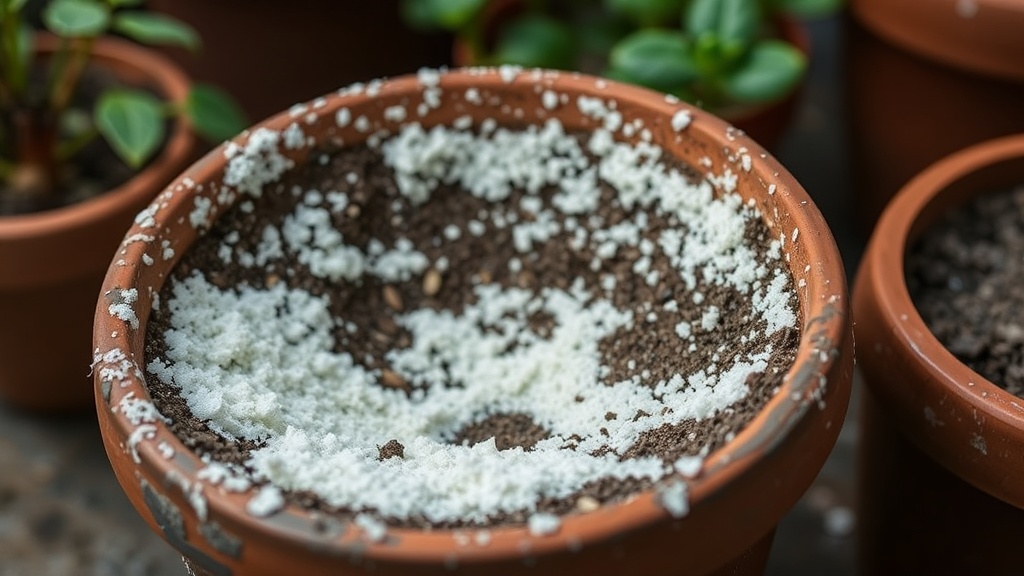
Why Your Garden Pots Are Developing White Crusty Residue

Quick Tip
Flush your plants with distilled water or rainwater to prevent mineral and salt accumulation.
The Mystery of the White Crust on Your Planters
A gardener notices a fine, white, chalky film creeping up the edges of a terracotta pot or settling on the surface of the soil. It looks like salt, but it isn't seasoning. This buildup is a common sight in container gardening, and while it might look unsightly, understanding its cause is the first step to managing your soil chemistry. This residue is typically a sign of mineral or salt accumulation, which can eventually affect your plant's ability to take up water and nutrients.
Identifying the Culprit: Salt vs. pH
Most of the time, that white crust is caused by one of three things: mineral buildup from hard water, salt accumulation from fertilizers, or a shift in soil pH. If you use well water or tap water with high calcium carbonate levels, you are essentially depositing tiny amounts of minerals every time you water. If you use synthetic liquid fertilizers—like a standard 10-10-10 formula—excess salts that the plant cannot absorb stay behind in the potting mix, eventually crystallizing on the surface.
Sometimes, this buildup is a symptom of a larger issue with your plant's environment. For instance, if you notice your plants aren't thriving alongside this residue, it might be a sign that your soil is becoming too alkaline. This is a common struggle for those growing in containers, as the limited volume of soil makes it more susceptible to environmental changes than a traditional garden bed.
How to Fix and Prevent Buildup
You don't need to throw away your plants to fix this. Follow these practical steps to clear the crust and reset your containers:
- Flush the Soil: Use a technique called "leaching." Take your pots to a sink or a drainage area and run plain, distilled, or rainwater through the soil for several minutes. This helps wash the excess salts and minerals down through the drainage holes.
- Switch to Organic Fertilizers: Instead of high-salt synthetic liquids, try using organic options like fish emulsion or seaweed extract. These break down more naturally and are less likely to leave a heavy crust.
- Use Filtered Water: If you have very hard water, using a rain barrel or even filtered water for your most sensitive container plants can significantly reduce mineral deposits.
- Check Your Pot Material: Terracotta is porous and naturally absorbs minerals, making the white crust more visible. If you want to avoid the look, switch to glazed ceramic or high-quality plastic containers.
Regularly monitoring your soil health ensures your containers remain productive. If you are also noticing issues with your irrigation, you might want to read about why your garden hose is leaving brown spots to see how water quality affects your wider landscape.