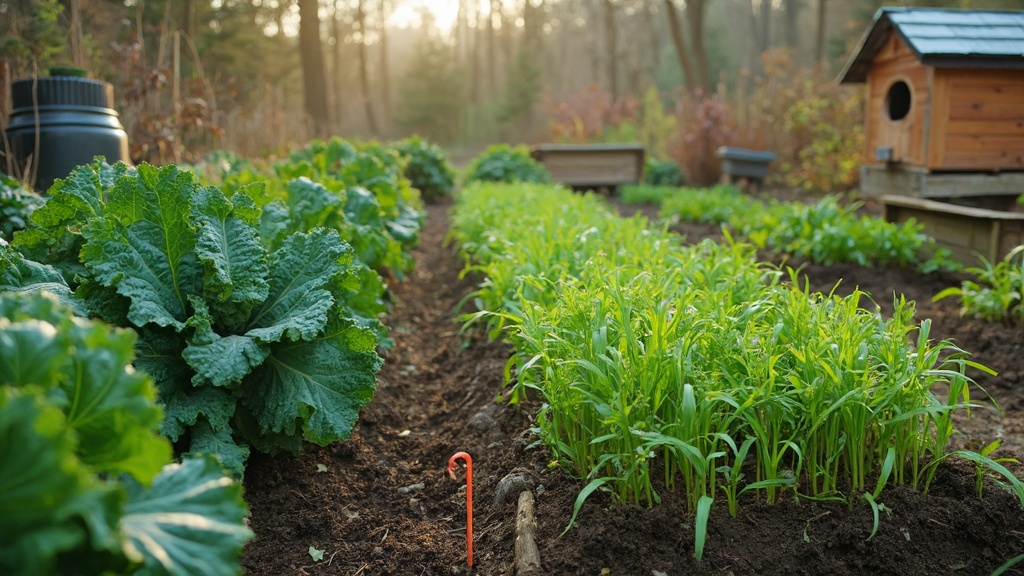
The Empty Bed Lie: Why Your 'Between Seasons' Garden Should Never Actually Be Empty

Hey friends, let's look at what's happening in my yard right now. I just pulled out the last of the overwintered carrots—sweet as candy, stained orange right through to the core—and I'm staring at a patch of bare earth that most people would call "done for the season." But here's the thing: that bare patch is a lie. It's not resting. It's not sleeping. It's just... waiting. And in a truly lush garden, we don't let our soil wait around twiddling its thumbs.
This is the season where most gardeners make a critical mistake. We plant our spring crops, harvest through summer, throw in some fall greens, and then we look at November like it's the finish line. We tidy up, mulch heavily, and call it a year. But 2026 is the year we're breaking up with that mindset—because the best gardens never actually stop growing.
The Succession Planting Epiphany
Here's what changed everything for me: realizing that my garden isn't a series of sprints with rest periods in between. It's a relay race, where one crop hands off to the next without the baton ever hitting the ground.
Right now, in late February here in Asheville (Zone 7a, soil temp hovering around 50°F), I've got four distinct generations happening simultaneously:
The Graduates: Those carrots I just pulled? They were planted last September. While everyone else was putting their gardens to bed, I was tucking in seeds that would give me fresh harvests in February when the grocery store produce tastes like wet cardboard.
The Seniors: My kale and collards are still standing proud, having shrugged off multiple freezes. The cold actually made them sweeter—when a plant senses frost, it converts starches to sugars as a natural antifreeze. (Nature is so much smarter than we are.)
The Freshmen: Arugula, spinach, and mâche that I seeded in January under a simple row cover are now the size of my thumb, ready to take over when the brassicas finally call it quits in April.
The Newborns: Just yesterday, I direct-seeded more radishes and salad greens into that "empty" carrot bed. They'll be ready to harvest by mid-April—before I even transplant my tomatoes.
Why This Matters More Than Ever
The research coming out of extension offices across the country is clear: gardeners who embrace succession planting and season extension are harvesting 40-60% more food from the same square footage. But it's not just about yield—it's about resilience.
When you have multiple crops at different life stages, a late frost doesn't wipe out your entire season. A pest outbreak in one bed doesn't mean dinner is ruined. And here's the part that makes my designer heart sing: a garden that's always in transition is a garden that's always beautiful. There's always something emerging, something thriving, something going to seed for the birds.
The "Sliding Window" Method
I'm going to share my actual system—the one I use to keep Eleanor Roosevelt (my compost pile, currently running at a toasty 140°F) fed and my family eating fresh greens even when there's still frost on the ground.
Think of your garden beds like sliding windows. As one crop finishes, you don't close the window—you slide it open for the next. Here's my late February playbook:
Week 1: Harvest the last of the overwintered roots. Immediately amend that bed with a shovel of fresh compost (thank you, Eleanor), scratch in some organic fertilizer, and direct seed cold-hardy greens.
Week 2: While those seeds are germinating, start your warm-weather transplants indoors—tomatoes, peppers, eggplant. They'll be ready to go in the ground 6-8 weeks from now, just as your spring greens are finishing up.
Week 3: Assess your brassicas. Are they still producing? Great—leave them. Are they starting to bolt? Harvest the last leaves, pull the plants, and immediately sow summer squash or bush beans in their place.
The key is overlap. Never let a bed sit empty for more than a week. Bare soil is sad soil—it's losing moisture, nutrients are leaching away, and the microbiome is going dormant. Keep it planted, keep it covered, keep it alive.
Simple Season Extension (No Greenhouse Required)
I know what you're thinking: "Callie, this sounds great, but I don't have a heated greenhouse." Friends, neither do I. What I have is a $30 row cover from the hardware store and some old PVC pipes bent into hoops.
A simple layer of agricultural fabric (I use a medium-weight 1.5 oz fabric) can extend your growing season by 4-6 weeks on either end. It traps heat during the day, moderates temperature swings at night, and keeps the soil workable when everything around it is frozen solid.
Right now, I have three beds under cover: one with those January-seeded greens, one with overwintering scallions, and one that I just planted with snap peas. The soil underneath is 10-15 degrees warmer than exposed beds, and the plants think it's April already.
The Beauty of "In-Between"
Here's my favorite part, and the thing I want you to take away from this: a garden that's always transitioning is a garden that teaches you something new every single week.
When you only garden from May to September, you miss the quiet magic of winter growth. You miss watching kale turn sweeter with each frost. You miss the early spring explosion when arugula goes from seed to salad in 21 days. You miss the satisfaction of pulling a fresh carrot in February and realizing you outsmarted the grocery store industrial complex with nothing but a packet of seeds and some patience.
Your garden doesn't need a vacation. The soil doesn't need to rest—it needs to be fed, covered, and kept alive. The microorganisms, the fungi, the earthworms... they're all still working down there, even when you think everything is "done." Give them plants to support, roots to feed, and they'll give you soil that gets richer every single year.
The Big Win
Okay, here's your actionable takeaway: Go look at your garden right now. Find one bed that's "done" or resting. Pull whatever's left, add compost, and plant something. Anything. Radishes, spinach, arugula, snap peas—whatever makes sense for your zone and your season.
Don't wait for the "perfect" planting time. Don't wait until you've done more research or bought the right tools. Just plant. The worst thing that happens is you lose a $2 packet of seeds. The best thing? You realize your garden never had to sleep in the first place.
Because here's the truth: the empty bed isn't resting. It's just waiting for you to wake it up.
Now get out there and get your hands dirty. Eleanor Roosevelt is waiting.