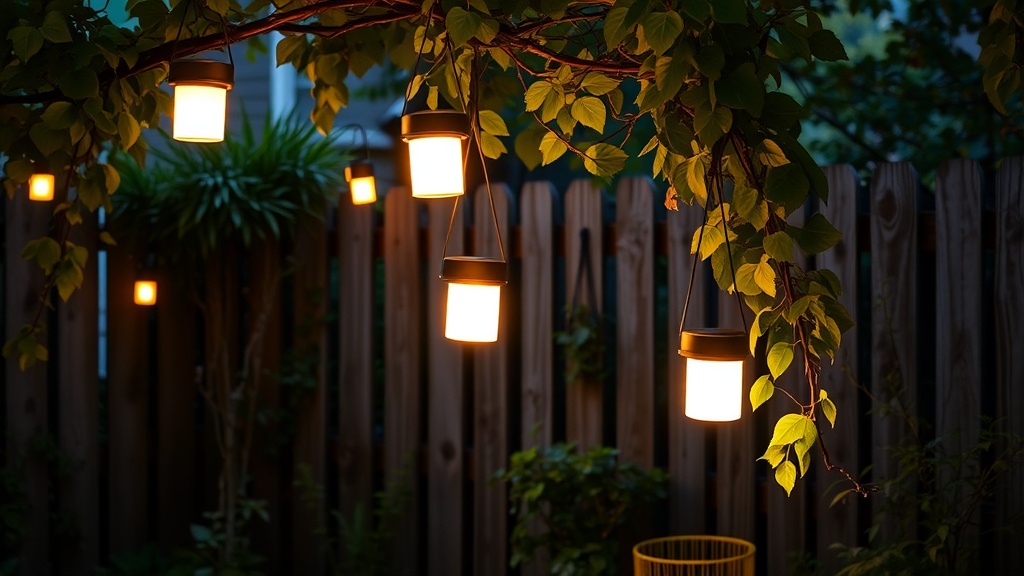
Solar Garden Lighting 2026: Bright Ideas for a Sustainable Evening Oasis

Solar Garden Lighting 2026: Bright Ideas for a Sustainable Evening Oasis
Hey friends, ever find yourself lingering on the patio after sunset, wishing the garden could stay as inviting as it is at noon? I’ve been there — staring at a dark yard, dreaming of fireflies, and then remembering the electric bill. What if you could light up your edible jungle without adding another watt‑hour to your house? The answer is solar garden lighting, and 2026 brings a handful of game‑changing options.
Why go solar for garden lighting?
First, the numbers. The USDA NRCS water‑wise and energy‑wise guidelines (Mar 2026) note that outdoor lighting can account for up to 12 % of a typical suburban home's electricity use. Switch to solar and you cut that slice out entirely.
Second, the vibe. Solar fixtures come in low‑profile designs that blend into mulch, vines, or reclaimed wood — perfect for a garden that feels wild, not wired.
Finally, the future‑proof factor. New 2026 models integrate smart sensors that dim when the moon is bright, charge faster with multi‑cell panels, and even talk to your phone via Bluetooth.
Which solar lighting styles suit an edible jungle?
- String lights on trellises. A draped string of tiny LEDs adds a festive canopy over beans or peas. Look for weather‑sealed copper or stainless‑steel strands that won’t rust in the rain.
- Spotlights for focal plants. A 2‑W LED spotlight can showcase a prized heirloom tomato or a flowering rosemary patch. Choose fixtures with adjustable heads so you can follow the sun’s arc.
- Path lanterns. Low‑profile lanterns tucked into mulch guide barefoot walks and keep critters safe. Solar lanterns with a ceramic base blend with stone pathways.
- Ground‑level uplights. These sit flush with the soil and cast a soft glow upward, perfect for highlighting a mound of compost or a rain‑garden basin.
How do I choose the right solar lights for my garden?
- Battery capacity. Look for Li‑ion or Li‑FePO4 packs rated for at least 8 hours of night‑time run‑time. The BBC Gardeners World 2026 review recommends a minimum of 2000 mAh for most backyard applications.
- Panel size & efficiency. A 5‑W monocrystalline panel will charge faster than a 3‑W poly‑crystalline one, especially in our Zone 7b winters when days are short.
- Smart features. Motion sensors, dusk‑to‑dawn timers, and Bluetooth app control are now standard. They prevent wasted charge on cloudy nights and let you dim lights from your phone.
My personal rule of thumb: if the spec sheet doesn’t list a minimum run‑time or charging time, walk away.
Step‑by‑step: Installing solar lights in an edible garden
- Plan the layout. Sketch your garden on graph paper. Mark existing pathways, trellises, and the spots where you want light. Aim for a balanced distribution — no more than two fixtures per 25 sq ft.
- Choose the right mounting spot. Solar panels need unobstructed southern exposure (or northern exposure in the Southern Hemisphere). In Asheville, a spot on the south‑facing fence gets ~5‑6 hours of direct sun in March.
- Secure the fixtures. Most solar lights come with stakes or brackets. For trellis lights, use zip‑ties or stainless‑steel screws. Don’t forget to anchor any heavy lanterns to a post so wind doesn’t knock them over.
- Charge before first use. Place the lights in direct sun for 24 hours before turning them on. This ensures the battery reaches full capacity.
- Test and adjust. After dusk, turn the lights on. Walk the garden and note any dark spots or glare. Re‑angle spotlights and add extra path lanterns if needed.
Pro tip: install a small rain‑water catch‑up near the lighting zone. A shallow saucer under a lantern can collect runoff for later use, turning your night‑time décor into a micro‑irrigation system.
How do I maintain and troubleshoot solar garden lights?
- Clean the panels. Dust and pollen act like a sunscreen. Wipe with a soft damp cloth every month.
- Check the battery. After a year, Li‑ion cells lose capacity. Replace any fixture whose run‑time drops below 50 % of the spec.
- Inspect connections. Corrosion on the charging contacts can cripple performance. A dab of silicone grease on the connector helps.
- Seasonal storage. In the deep winter (Dec‑Feb) when days are short, store the lights indoors and re‑charge them on a sunny windowsill.
If a light won’t turn on after a full day of sun, flip the polarity switch (most models have one) and re‑test. If it still fails, the battery is likely dead.
What are the top solar lighting trends for 2026?
- Smart integration. Lights now sync with home assistants (Alexa, Google Home) and can be programmed via a single app. You can set a “Garden Glow” scene that fades lights over an hour.
- Biophilic design. Fixtures mimic natural forms — mushroom caps, stone pebbles, and woven reeds — so they feel like an extension of the garden, not an add‑on.
- Hybrid solar‑wind units. Some 2026 models combine a tiny vertical‑axis wind turbine with a solar panel, ensuring charge on overcast days. They’re perfect for breezy Asheville evenings.
Takeaway: Light up your garden without dimming your conscience
Solar garden lighting lets you enjoy evenings outdoors, keep critters safe, and stay under budget. Pick fixtures with solid battery specs, place them where the sun loves them, and give them a quick clean each month. Soon you’ll be strolling past glowing herbs and veggies, feeling like the night belongs to your garden as much as the day does.
FAQ
What is the average lifespan of a solar garden light?
Most quality fixtures last 5‑7 years before the battery needs replacement, according to the Consumer Reports 2026 guide.
Can solar lights work in winter when days are short?
Yes, but you’ll need larger panels or hybrid solar‑wind models. In Zone 7b, a 5 W panel plus a clear, south‑facing mount usually provides enough charge for 6‑8 hours of night‑time light.
Do solar lights attract insects?
LEDs emit very little UV, so they’re far less attractive to bugs than traditional incandescent bulbs. Adding a tiny cup of citronella oil near a lantern can further deter pests.
Steps
- 1
Plan the layout
Sketch your garden, mark pathways and trellises, and decide where each light will go. Keep a balanced distribution—no more than two fixtures per 25 sq ft.
- 2
Choose mounting spots
Select spots with unobstructed southern exposure (or northern in the Southern Hemisphere). In Asheville, a south‑facing fence gets ~5‑6 hours of direct sun in March.
- 3
Secure the fixtures
Use stakes, brackets, zip‑ties, or stainless‑steel screws. Anchor heavier lanterns to posts to withstand wind.
- 4
Charge before first use
Leave the lights in direct sun for 24 hours so batteries reach full capacity before you switch them on.
- 5
Test and adjust
After dusk, turn lights on, walk the garden, note dark spots or glare, and re‑angle spotlights or add extra lanterns as needed.