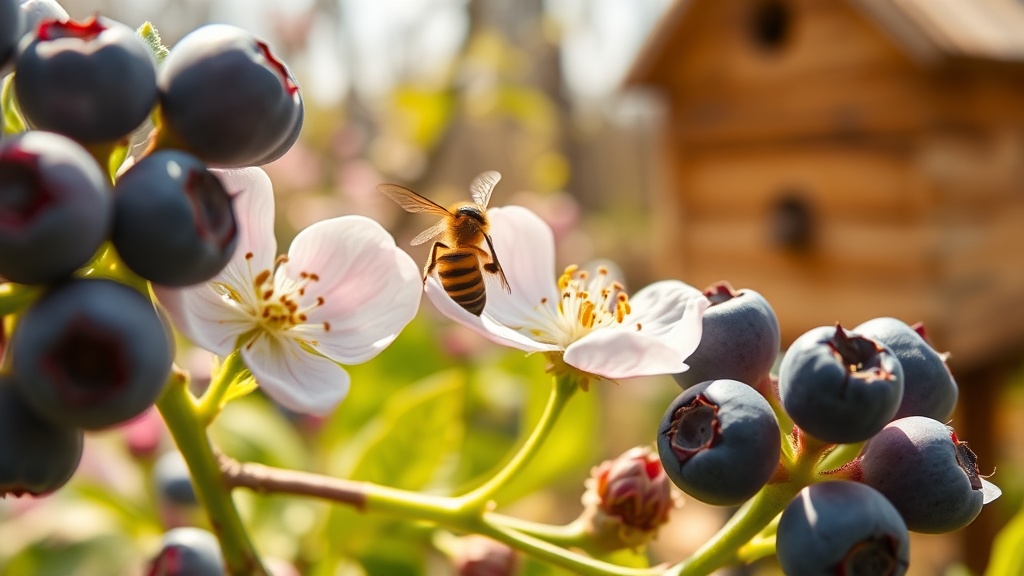
Mason Bees in March: Why I Ditched Honeybee Dreams for Native Pollinators

I Stopped Begging Honeybees to Visit and Started Inviting Mason Bees Instead
Three springs ago, I was standing in my garden watching my blueberry bushes bloom their hearts out with almost nothing visiting them. I had flowers. I had water. I had every companion plant the internet told me to grow. But the honeybees in my Asheville neighborhood were doing their own thing half a mile away at someone else's clover field, and my fruit set was pathetic.
Then a friend who keeps native bee habitat told me something that changed how I think about pollination entirely: "You don't have a bee problem. You have the wrong bee expectation."
She was right. I'd been fixated on honeybees—a European import that needs managed hives and a beekeeper—when the most efficient pollinator for my garden was already nesting in my dead wood pile. Mason bees. Osmia lignaria. Native. Solitary. Gentle enough to let my kid watch them from six inches away. And pound for pound, they outpollinate honeybees by a factor I still find staggering.
Why Mason Bees Are the Pollinator Your Edible Garden Actually Needs
Here's the number that got me: a single mason bee visits roughly 1,600 flowers per day. A honeybee visits about 50-1,000, depending on who's measuring. But the real difference isn't volume—it's sloppiness.
Honeybees are meticulous. They pack pollen into neat little baskets on their legs, moistened with nectar so it sticks. Very efficient for the hive. Terrible for your flowers. A lot of that pollen never touches a stigma.
Mason bees are a mess. They belly-flop onto flowers and the pollen sticks to the coarse hair all over their abdomen. When they crash into the next flower, pollen falls everywhere. It's like the difference between a careful painter and a toddler with finger paints. The toddler gets more coverage.
For my blueberries, stone fruit, and apple trees, that sloppiness translates directly into fruit. The spring after I put up my first mason bee house, my blueberry yield roughly doubled. Same bushes. Same soil. Different pollinator strategy.
March Is the Month—Here's Why Timing Matters
Mason bees in zone 7b emerge when daytime temperatures consistently hit 55°F. In Asheville, that's mid-March most years—right about now. They have a short active season: roughly six to eight weeks. They mate, the females build nests, lay eggs, provision each cell with a pollen-and-nectar ball, seal it with mud, and then they're done. Dead by early summer. The next generation develops inside those sealed tubes all year, emerging the following March.
If you're setting up habitat for the first time, you want it ready before emergence. That means this week. Not April. Not "when it warms up more." Now.
If you're buying mason bee cocoons from a supplier—which is a perfectly good way to start—they need to go into your refrigerator now and come out when you see consistent 55°F days. I set mine on my porch in a small open container near the bee house. They warm up, orient themselves, and get to work within a day or two.
The Bee House Setup That Actually Works (and the Pinterest Ones That Don't)
I need to be blunt about this because there's a lot of bad mason bee housing out there.
Those decorative "bee hotels" with fifty different materials crammed in? Mostly useless for mason bees. Some of those bamboo tubes are the wrong diameter. The pine cones do nothing. The ornamental bark is habitat for things you didn't intend to attract. They look cute on Instagram. The bees don't care about cute.
What mason bees actually need:
- Tubes that are 5/16 inch in diameter and 6 inches deep. That's the specification for Osmia lignaria. Smaller holes attract different species (which is fine but won't give you the pollination boost you're after). Bigger holes get ignored.
- A south or southeast facing location that gets morning sun. Mason bees are cold-blooded. They need morning warmth to get moving. My house faces southeast, mounted on my garden shed at about eye height, and the bees are active by 9 AM on a 60°F day.
- Proximity to mud. This is the one everyone forgets. Mason bees seal each egg cell with mud. Not dirt—actual clayey mud. If there's no mud source within about 50 feet of your bee house, your female bees will waste enormous energy flying around looking for it. I keep a shallow dish of clay-heavy soil near my house, kept moist. Takes thirty seconds to maintain. Makes a measurable difference.
- Replaceable tubes or liners. This is critical. Solid wood blocks with drilled holes—the classic DIY approach—look great the first year. By year two, they're harboring mites, fungal spores, and chalkbrood disease. You can't clean them. Paper tube liners or natural reed tubes that you replace annually are the way to go. I buy cardboard tube inserts in bulk and swap them every fall.
My Actual Setup, Warts and All
I'm not going to pretend my system is elegant. It's a wooden tray house I built from scrap cedar—basically a box with a roof overhang, open at the front, that holds about 60 paper tube inserts. The overhang matters: rain kills developing larvae. The whole thing is screwed to the south side of my garden shed, about five feet up.
Next to it on a little shelf, I have a terracotta saucer filled with red clay subsoil dug from the back corner of my yard (Asheville has no shortage of red clay). I add water every couple of days to keep it the consistency of soft peanut butter. That's the mud station.
Within 20 feet of the house, I have early-blooming food sources: my blueberry bushes, a crabapple, native redbuds, wild violets that I let colonize the garden edges, and a patch of phacelia I started growing two years ago specifically because mason bees lose their minds over it. Phacelia is an underrated cover crop and bee magnet—it blooms about four weeks after sowing, and the bees work it from dawn to dusk.
That's the whole system. Cedar box, paper tubes, mud dish, early flowers. Total investment was maybe the cost of a decent garden tool. Most of that was the tube inserts.
What About Diseases and Parasites?
This is where I wish more mason bee enthusiasts were honest. Managed native bee habitat has disease risks, just like managed honeybee hives.
Chalkbrood (Ascosphaera fungi) is the biggest concern. Infected larvae turn into chalky gray or black mummies inside the tube. If you crack open a tube in fall and see hard, dark lumps instead of healthy cocoons, that's chalkbrood. The fix is hygiene: replace tubes annually, harvest cocoons in fall, and wash healthy cocoons in a mild bleach solution (1 tablespoon per quart of cool water, soak 5 minutes, rinse, air dry) before storing them in the fridge for winter.
Pollen mites are the other common issue. Tiny mites that consume the pollen provision meant for the larva. The larva starves. Again—replaceable tubes and fall cocoon harvesting are your defense.
I do a cocoon harvest every October. I open the tubes, separate the healthy cocoons (they're solid and dark), discard anything that looks wrong, wash the good ones, and refrigerate them in a breathable container with a slightly damp paper towel. It takes about an hour for my 60-tube setup. It's weirdly satisfying—like shelling peas, but for next year's pollination.
The Part Nobody Talks About: Leaving Wild Habitat Too
Here's my actual opinion, and it's one that gets me into mild arguments with the mason-bee-house crowd: the best thing you can do for native bees isn't buying a bee house. It's leaving dead wood, bare soil patches, and hollow stems in your garden.
Mason bees evolved nesting in beetle holes in dead trees, hollow plant stems, and natural cavities. A managed bee house is supplemental habitat. The foundation should be structural: don't remove every dead branch. Leave a section of pithy-stemmed plants (elderberry, raspberry canes, sumac) standing through winter instead of cutting everything to the ground in your fall cleanup frenzy. Let a patch of soil stay bare and uncovered—ground-nesting bees (which are 70% of native bee species) need exposed earth to dig into.
I have a "snag corner" in the back of my yard—a dead sourwood trunk and a pile of old branches that I never clean up. It's not pretty by conventional standards. But every March, I see mason bees emerging from beetle holes in that wood before my managed house even gets its first visitor. They've been there all along. They just needed me to stop tidying up their home.
My bypass pruners stay in my pocket during March snag inspections. The dead wood stays.
What to Do This Week
If you're in zone 7b or similar and you want mason bees working your garden this spring:
- Get a house up now. Build or buy—either works. Face it southeast, mount it solidly (no swinging), protect it from rain. My homemade cedar box has outlasted two store-bought versions.
- Order cocoons if you don't have a local population yet. Several reputable suppliers ship dormant cocoons. Get Osmia lignaria specifically. Store them in your fridge until consistent 55°F days, then set them near the house.
- Set up a mud station. Clay soil in a dish, kept moist. The simplest upgrade with the biggest impact.
- Don't spray anything. No pesticides, no fungicides, not even the organic ones, within 50 feet of the house during the active season. Mason bees are more sensitive to pesticides than honeybees. One application of spinosad on blooming plants will wipe them out.
- Plant phacelia. Sow seeds directly now. It'll bloom in four to five weeks, right in the peak of mason bee activity. It's cheap, easy, and the bees go absolutely feral for it.
My garden isn't a showpiece. It's a working system, and the mason bees are part of the crew—right up there with the garter snakes eating slugs and the wrens eating caterpillars. When I stopped trying to attract a managed European species and started supporting the natives that were already here, everything pollinated better. The blueberries. The apples. Even the tomatoes benefited from the increased buzz pollination from bumble bees that showed up once I improved habitat generally.
You don't need a honeybee hive. You need a cedar box, some paper tubes, and the willingness to let part of your yard be a little bit wild.
That's always the answer, isn't it?