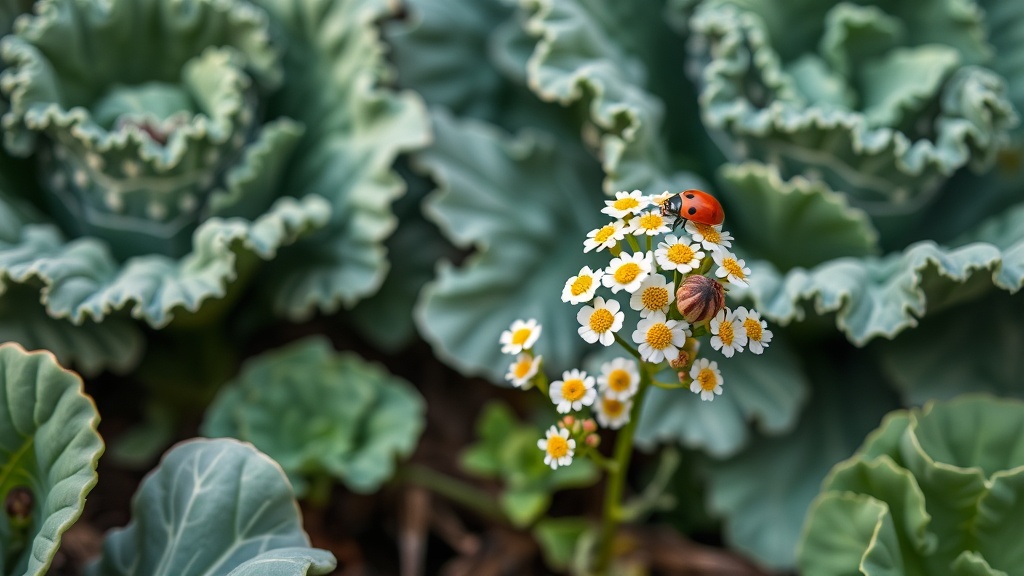
March Pest Control Without Spraying: How I Let My Garden Fight Its Own Battles

The Aphids Showed Up Before My Tomatoes Did
Last week I walked out to check on my overwintered kale — the stuff that survived Asheville's February mood swings and was finally pushing new growth — and found the undersides of every leaf crawling with green aphids. March hadn't even warmed up properly and the pests were already at the buffet.
This happens every single spring. The soft-bodied insects wake up before the predators that eat them. Ladybugs are still hibernating. Lacewing larvae haven't hatched. Your garden is basically an unguarded salad bar for two to four weeks, and if you don't have a plan, you'll be reaching for a spray bottle full of something you'll regret.
I stopped spraying anything — even the "organic" stuff — three years ago. Here's what I do instead, and why my pest pressure has actually gone down since I quit fighting.
Why I Don't Spray (Not Even Neem)
I know neem oil is the darling of the organic gardening world. I used it for years. But here's my problem with it: neem is an equal-opportunity killer. It disrupts the hormones of any soft-bodied insect it touches, which means the hoverfly larvae eating your aphids die right alongside the aphids themselves. You solve this week's problem and create next month's.
Same goes for insecticidal soap, pyrethrin, even diatomaceous earth on wet leaves. They're all broad-spectrum. They don't read the "beneficial" tag you mentally assigned to certain bugs.
My approach is stupidly simple: make the garden so attractive to predators that the pests become food, not a problem. It takes a full season to establish, but once it clicks, it mostly runs itself.
The March Pest Prevention Playbook (Zone 7b Edition)
1. Leave the Mess a Little Longer
I know you want to clean up. I know the dead stalks from last year's zinnias look rough. But those hollow stems are where your native beneficial insects overwintered. The lacewing eggs are in there. The tiny parasitic wasps that lay eggs inside aphids — they're tucked into leaf litter and old seed heads.
My rule: don't cut anything down until nighttime temperatures stay above 50°F consistently. In Asheville, that's usually late March or early April. If you already cleaned up — that's fine, just don't beat yourself up. Focus on the next steps.
2. Plant the Predator Pantry Right Now
This is the single most effective thing I've done for pest control, and it costs almost nothing. I keep strips of these plants throughout every bed, not in a separate "beneficial insect garden" that's twenty feet from the problem:
- Sweet alyssum — Direct sow now. It germinates in cool soil and starts blooming fast. Hoverflies (whose larvae eat aphids like popcorn) are obsessed with it. I scatter seed at the base of every brassica.
- Dill and cilantro — Let last year's self-sown volunteers come up. If you don't have any, direct sow now. The umbel flowers attract parasitic wasps. I intentionally let cilantro bolt — it's more useful as a pest-control plant than as a herb.
- Crimson clover — If you have any bare ground, broadcast crimson clover seed. It fixes nitrogen, feeds pollinators, and the dense growth gives ground beetles cover. Ground beetles eat slugs. Slugs are about to be a problem.
The key insight that took me too long to learn: beneficial insects need food before the pests arrive. If you wait until you see aphids to plant attractors, the predators won't be established. You need flowers in bloom by the time pest populations spike.
3. Water Blast — My One "Treatment"
When I do find a cluster of aphids on something I care about — like that kale, or early lettuce — I hit it with a hard spray from the hose. Not a gentle mist. A targeted jet that knocks them off the leaves and onto the ground, where they can't climb back up and where ground beetles find them.
I do this every other morning for about a week. It sounds tedious but it takes maybe three minutes. By the time the ladybugs finally wake up, the aphid population is manageable enough that the predators can actually keep up.
4. Slug Patrol Starts Now
Slugs overwintered in your mulch and they're hungry. In Asheville's wet March weather, they'll shred young transplants overnight. Two things I actually do:
- Evening handpicking. Go out with a headlamp after 9 PM. Bring a container of soapy water. This sounds disgusting and it is. It also works better than anything else I've tried. Two or three nights of this dramatically reduces the population.
- Copper tape around raised bed edges. Not copper mesh, not pennies — actual adhesive copper tape. Slugs won't cross it. I've had the same tape on my lettuce bed for two seasons.
I don't use beer traps anymore. They attract slugs from your neighbors' yards too, which is the opposite of what you want.
5. Row Cover for the Things You Really Can't Lose
For my early brassica transplants — the cabbage and broccoli I set out in March — I use lightweight floating row cover. Not for frost protection (though it helps with that too), but specifically to keep cabbage moths from laying eggs. One layer of fabric, some landscape staples, and zero caterpillars.
I'll remove the covers once the plants are established and the beneficial insect populations are active, usually by mid-April.
What This Looks Like in Practice
My garden right now is not Instagram-ready. There are dead flower stalks standing between emerging garlic rows. Sweet alyssum seedlings are coming up in messy patches between kale plants. The crimson clover I broadcast in the pathways is just starting to show green.
But I have zero pest damage on any of my spring crops. Zero. And I haven't sprayed a single thing.
Compare that to three years ago when I was out there every weekend with a neem oil sprayer, fighting the same aphids that kept coming back because I was also killing everything that eats aphids. I was working harder and getting worse results.
The lazy approach — leave the mess, plant flowers, blast with water, pick slugs at night — turns out to be the one that actually works. My garden has a functioning immune system now, and all I had to do was stop trying to be its doctor.
Your March Pest Checklist
- Hold off on garden cleanup until nights hit 50°F
- Direct sow sweet alyssum at the feet of vulnerable crops
- Let cilantro and dill volunteers grow — don't weed them
- Broadcast crimson clover on bare ground
- Water-blast aphid clusters every other morning
- Handpick slugs after dark for three consecutive nights
- Apply copper tape to raised bed edges
- Cover brassica transplants with floating row cover
- Resist the urge to spray anything — including organics
The pests are already awake. Your job isn't to kill them — it's to make sure your garden's defense team wakes up right behind them. Start this week and by April, the system handles itself.
Got a pest problem you're wrestling with this spring? Drop it in the comments — I've probably tried (and failed at) the same thing before figuring out what actually works.