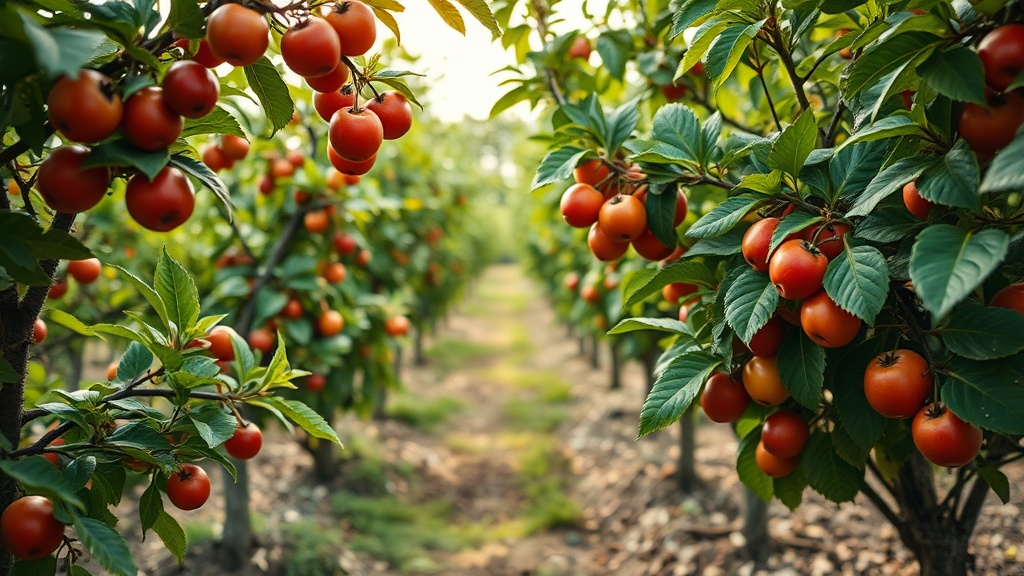
Growing a Productive Fruit Orchard in Small Backyard Spaces

In this guide, you'll learn how to select, plant, and maintain fruit-bearing trees and shrubs even if your backyard is small or oddly shaped. We'll cover the differences between tree types, how to manage soil health, and practical ways to get much more food from a limited footprint.
Most people think you need a massive farm to grow fruit, but that's just not true. You can turn a tiny corner of your yard or a narrow strip along a fence into a food forest. It's about working with what you have, not fighting against it. Whether you have a tiny suburban lot or a standard-sized backyard, there are ways to stack your layers so you get apples, berries, and stone fruit without taking up the whole yard.
What are the best fruit trees for small backyards?
If you don't have much room, the secret is looking for "dwarf" or "columnar" varieties. Standard trees can grow thirty feet tall and wide, which is a nightmare for a small yard. Columnar trees, however, grow straight up like a pillar—they're narrow, don't spread out much, and are perfect for planting against a wall or a fence. They're much easier to prune and won't shade out your entire garden.
You should also look into fruit shrubs or berries. Blueberries, currants, and even dwarf raspberries can provide a huge amount of food in a very small space. If you're working with a small area, think vertically. You can use espalier techniques—which is just a fancy way of saying training a tree to grow flat against a wall or a trellis—to save space. It keeps your garden looking intentional and prevents the trees from becoming a tangled mess.
| Tree Type | Space Needed | Sun Requirement |
|---|---|---|
| Columnar Apple | Very Low (Narrow) | Full Sun |
| Dwarf Peach | Medium | Full Sun |
| Espaliered Pear | Low (Flat) | Full Sun to Part Sun |
| Blueberry Bush | Low | Acidic Soil/Full Sun |
How do I prepare soil for fruit trees?
You can't just dig a hole and expect a miracle. Fruit trees need good, well-draining soil to actually thrive. If your ground is heavy clay (which is common in many suburbs), you'll need to amend it. I always recommend adding plenty of compost and organic matter before you ever put a plant in the ground. This improves drainage and adds nutrients without relying on synthetic fertilizers.
Check your pH levels too. Some fruits, like blueberries, are incredibly picky and need acidic soil to produce anything worth eating. If your soil is too alkaline, the plant won't be able to take up nutrients, and you'll end up with a lot of green leaves but zero fruit. You can find simple soil testing kits at local garden centers or through the University Extension services to see exactly what you're working with.
Don't forget about the drainage. A fruit tree's roots hate sitting in water—it's a death sentence. If your yard has a low spot where water pools after a rain, don't plant your orchard there. You might need to build a slightly raised mound to give the roots a better start.
How much sun do fruit trees need to produce fruit?
This is the most common mistake I see. You might have a beautiful, shady corner, but fruit trees are sun-hungry. Most of them need at least six to eight hours of direct sunlight every single day. If you plant them in the shade of your house or under a massive old oak tree, you'll get plenty of leaves, but you won't get much fruit.
If your yard is heavily shaded, skip the heavy-duty fruit trees and look at shade-tolerant berries or herbs instead. If you're determined to grow fruit in a dimmer area, look for varieties that handle partial shade better, but keep your expectations realistic. Sun is the engine that makes the sugar develop in the fruit. Without it, your harvest will be small and the flavor will be lackluster.
Can I grow fruit in containers?
Absolutely. If you're renting or just don't want to dig into the ground, container gardening is a great way to start. You can find many "patio" varieties of citrus, apples, or even peaches that are designed specifically for pots. This gives you the flexibility to move them around as the seasons change or if you realize a spot doesn't get enough light.
When growing in containers, you must use high-quality potting mix—never garden soil. Garden soil is too heavy and will compact in a pot, suffocating the roots. You'll also need to water more frequently because pots dry out much faster than the ground. I usually keep a dedicated watering can right next to my containers so I don't forget.
For more tips on container-specific needs, the Old Farmer's Almanac has some wonderful advice on variety selection. It’s a great way to test the waters before committing to a permanent planting in your yard.
Remember, gardening isn't about perfection; it's about observation. Spend time in your yard. Look at how the light moves. Watch how the plants react to the weather. If a tree looks a bit sad, don't panic—just look closer. Is it too wet? Is it too dry? Is it getting enough light? Most of the time, the answer is right in front of you. Growing your own food is a long game, but seeing that first ripe peach hanging from a branch makes every bit of effort worth it.