Bareroot Season in Asheville: Why March Is Your $50 Discount on Quality Trees

Let's talk about what nobody tells you about bareroot trees—starting with the part the nursery industry would prefer you not know.
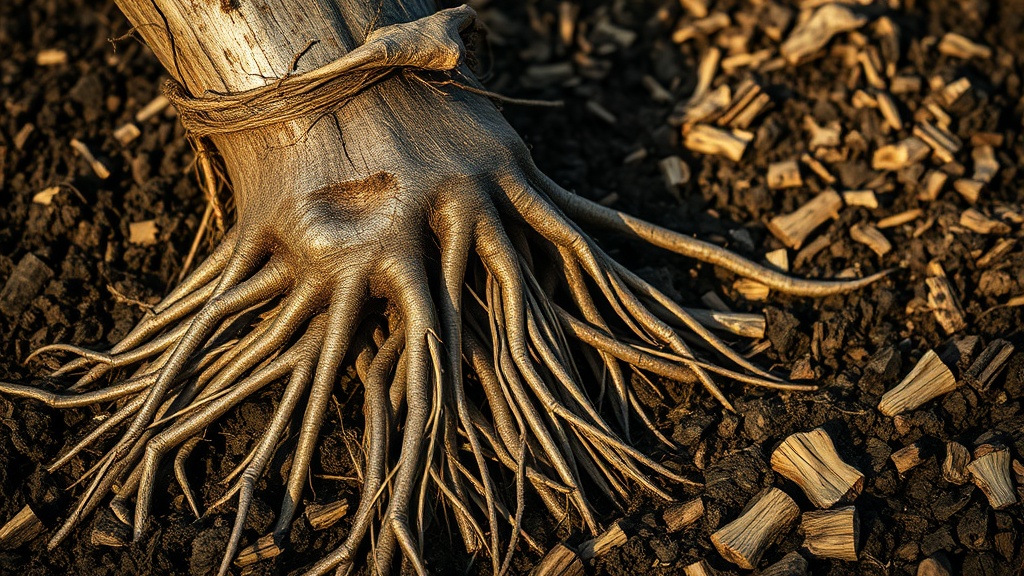
That red maple in a container at the garden center in May? It's been sitting in that pot since last fall, circling its roots, slowly girdling itself. It costs $120. The same tree, bareroot, ordered now, costs $35. And the bareroot tree—the dormant, naked-root bundle that looks vaguely alarming when it arrives—will almost certainly outperform the container stock in five years. I've seen it happen enough times that I stopped being surprised.
I planted hundreds of container trees during my landscape design career and watched too many of them stall, struggle, and silently die while everyone blamed the homeowner's watering habits. I've been using bareroot stock on my own property and recommending it to every person who asks me for tree advice ever since I quit corporate landscaping. March is the reason why.
The Math First, Because It's Embarrassing
Bareroot trees in Asheville run $25–60 for most ornamental and native species. Fruit trees—apple, pear, persimmon—land between $30–55 depending on the rootstock. Chestnuts and native oaks are often under $30.
Container stock of the same species, same grade, arrives at nurseries in volume in May and June. It will cost you $80–200. Not because anything changed about the tree. Because the nursery now has to recoup months of watering, potting mix, container costs, and shelf space.
The bareroot price is not a quality discount. It's a timing discount. The tree is dormant, it doesn't need water or soil, it ships cheap, and the nursery isn't storing it. You're buying the same genetics, the same root system, before the markup clock started running.
If you're planting one tree, the difference is $50–70. If you're doing what I encourage every person on a 1/4 acre lot to do—which is put in 3–5 trees over the next two years—you're looking at $200–400 in savings. That's real money that goes toward soil amendment, mulch, and the plants that actually fill in underneath.
The Asheville Window (And Why It Closes Fast)
Zone 7b in Western NC means our bareroot season runs roughly late February through mid-March. The trees need to ship while dormant—before bud break. Once soil temps climb and buds start moving, bareroot stock loses viability fast.
The window typically closes mid-March in zone 7b—check with your specific nursery, but March 15 is a reasonable planning target. At that point, reputable nurseries stop shipping bareroot because the survivability rate drops once buds start moving. What's left on their lists is picked-over inventory—the varieties nobody wanted, the odd sizes.
Right now, Raintree Nursery's bareroot lists are still full. NC native plant society-recommended species like serviceberry (Amelanchier canadensis), redbud (Cercis canadensis), and pawpaw (Asimina triloba) are available. Next week, some of those lists will start showing "sold out." By the end of March, you're waiting until fall or paying container prices in spring.
The lesson I had to learn the hard way: you don't plan for bareroot trees in April when you're inspired by spring. You decide in January and order in February. If you haven't ordered yet and you're reading this in early March, you have maybe ten days. Move now or wait until September for the fall bareroot window.
The Design Part (This Is Where It Gets Real)
I spent years cleaning up other designers' tree mistakes. Not because they chose bad trees—because they chose trees without asking the right questions first.
Here's what actually matters when you're choosing bareroot trees right now:
What size are you designing for—and when?
A serviceberry (Amelanchier) gives you dappled shade and bird habitat in 5 years. A water oak (Quercus nigra) gives you a solid canopy in 10–15. A chestnut gives you a different relationship with time entirely. These aren't interchangeable. Know what you're trying to solve.
Are you blocking a sight line to the neighbor's shed? That's a screening problem. Serviceberry won't do it; a native viburnum hedge might do it faster. Are you trying to cool the west side of your house? That's a shade placement problem—and the answer lives in your lot's geometry, not the nursery catalog.
I had a client in my design days who planted three flowering cherries along the south property line because they were beautiful and on sale. In ten years, those trees would have blocked her best winter sun exposure and taken out her kitchen garden. She didn't ask what "south property line" meant for her house. She asked what was pretty. I should have pushed harder.
Native species first, always.
This isn't ideology. It's ecology and practicality. Native trees in zone 7b have co-evolved with this soil, these insects, this rainfall pattern. They don't need you as much after establishment. A Bradford pear (please, no more Bradford pears) needs management forever and feeds almost nothing.
My short list for Asheville bareroot right now:
- Serviceberry (Amelanchier canadensis): pollinators, birds, edible fruit, four-season interest, tolerates part shade
- Redbud (Cercis canadensis): early pollinator support, stunning in March, one of the first nectar sources native bees get all year
- Pawpaw (Asimina triloba): edible fruit, shade tolerant, zebra swallowtail host, relatively low pest pressure once established
- American persimmon (Diospyros virginiana): wildlife magnet, drought-tolerant once established, extraordinary flavor if you catch the fruit before the raccoons
- Chestnut (Castanea mollissima or hybrid): long game, food security, incredible ecological density
Design for the tree you're planting, not the tree you see today.
Bareroot stock looks like a stick with roots. In two years, it looks like a sapling. In five years, it's the anchor of your yard. Plant for the five-year version, not the stick.
Aftercare That Actually Matters
I'll be brief here because most of what gets written about this is wrong or overthought.
Mulch is your most important first-year move. Not bark mulch. Not dyed wood chips. Free arborist chips—call your local tree service, ask to be on the drop list, they'll usually deliver a whole load for nothing because it saves them a dump fee. Pile them 3–4 inches deep in a 3-foot diameter circle around the base. Keep chips off the actual trunk (no mulch volcanoes—this is how you rot a root flare). The chips feed your soil food web, suppress weeds, and retain moisture. Nothing you can buy at a box store does this as well.
Water deeply, not daily. In the first season, water once a week when there's no rain—slow and deep, not a quick sprinkle. You're trying to encourage roots to chase water downward, not laterally. A slow drip for 30–45 minutes once a week beats a five-minute daily spray every time.
Skip the stake for most bareroot trees. This is counterintuitive but correct. Unstaked trees develop trunk taper and root anchoring faster because they're moving in the wind. The motion signals the tree to thicken its trunk. If you're on a genuinely exposed hillside with regular strong winds, stake loosely with fabric ties—never wire, never tight—and remove the stake after one season. Most bareroot trees don't need it.
Don't fertilize the first year. The tree is putting everything into root establishment. Fertilizer pushes top growth before the roots can support it. Let the compost and wood chips do the slow work. Year two, if you want to amend, compost tea or a light top-dress of finished compost at the drip line is enough.
Trees Are Infrastructure
The thing I couldn't get my corporate clients to understand—and what I now say to every neighbor, workshop attendee, and garden tour visitor who asks why I planted so many trees on a quarter-acre lot:
Trees aren't decoration. They're infrastructure.
They cool your yard—and your house. They sequester carbon for decades. They feed insects that feed birds that feed your whole ecosystem. They anchor soil, manage stormwater, and if you chose edible or wildlife species, they produce food without you doing anything.
You can't move them once they're established. You can't buy the 15-year-old version of the tree you should have planted in 2025. Time is the one input in tree growing that money can't compress.
This is why I push back hard when people say they'll "wait until fall" or "see how the garden goes first." The tree you plant in March is the shade you'll sit under in 2030. The tree you don't plant is the $180 container stock you'll impulse-buy in June that takes twice as long to establish because it's been sitting in a pot since October.
Bareroot season is closing. The selection is still full. The math is still embarrassing in your favor.
Order the trees.